
Hot News
The 20 November law lets you choose your tax method. Choosing right takes numbers, not luck
The new law lets companies choose how their tax is calculated. Sounds like ordering from a menu. Except this menu has no prices, and the tastiest-looking dish can cost double.
Kaizen Accounting editorial team4 min read

You walk into a restaurant. The waiter hands you a two-dish menu. Dish A looks plain. Dish B has a lovely photo and a note: "no waiting". Neither shows a price. Which do you order?
Most people pick B. That is exactly the problem the new tax law has just put on the table for thousands of companies.
The new law in three lines
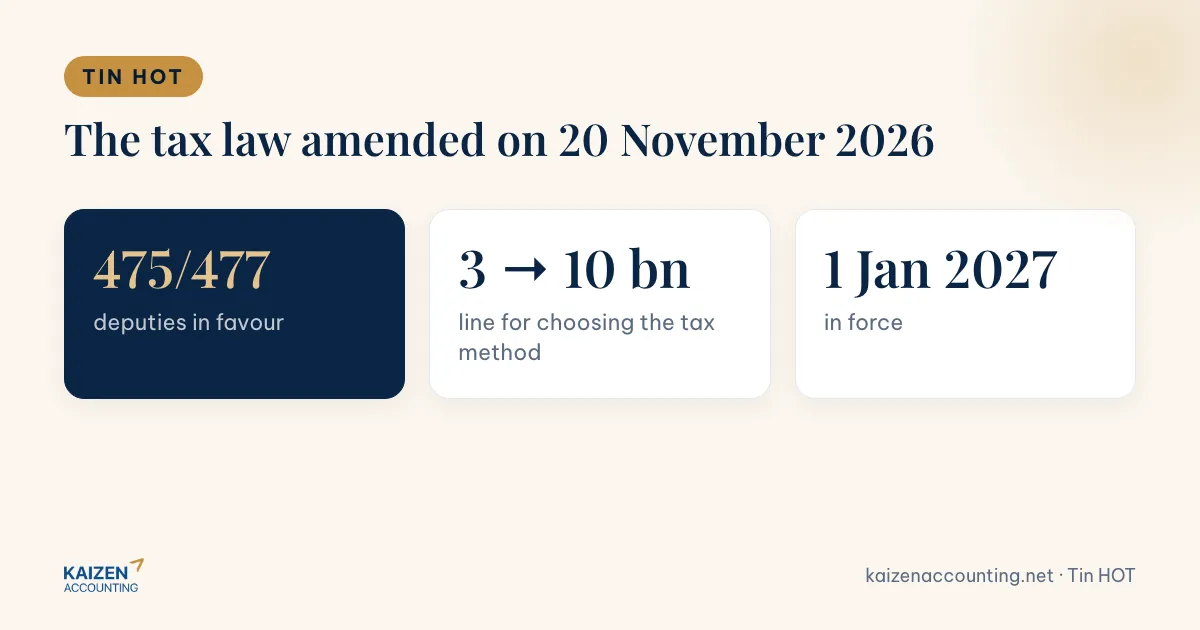
- On 20 November 2026, the National Assembly amended the CIT, Non-Agricultural Land Use Tax and PIT laws, with 475 of 477 deputies in favour.
- The revenue line for choosing your tax method rises from 3 to 10 billion dong, from the 2027 tax year.
- Companies employing many people with disabilities get a CIT cut equal to the extra they spend on them. The law takes effect on 1 January 2027; details await guidance.
Dish A, dish B and the bill
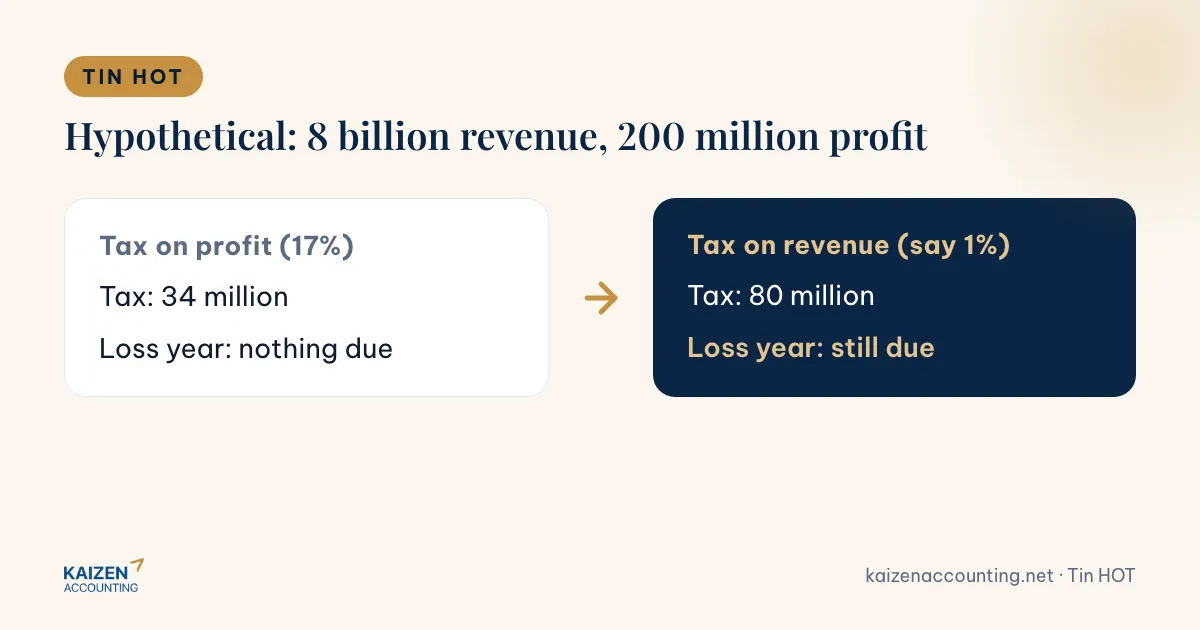
Dish A: tax on profit, as always. Dish B: a rate on revenue, tidy, little explaining. Now bring the bill.
A trading company with 8 billion of revenue and 200 million of profit, margins thin as rice paper. Dish A at 17%: 34 million. Dish B at, say, 1%: 80 million. More than double. And in a loss year dish B still arrives, and still has to be paid for. This restaurant does not accept "I didn't enjoy it today".
Flip it: a services firm with a 40% margin may find dish B much cheaper. Same menu, two tables, opposite bills. The official rate awaits guidance, but the principle is clear: no dish is cheapest for everyone.
Order with numbers, not feelings
- Work out your real margin for 2025 and 2026. Not the habitual "probably about 20%".
- Run both methods once the official rate is out and pick the lawful one that costs less. Kaizen's Tax ROI does the sums with you.
- Keep books good enough to keep the choice. Without reliable profit figures you have only one dish left, usually the expensive one. Bookkeeping keeps two options on your menu.
Back to the restaurant. People without numbers order the dish with the nice photo. People with numbers order the cheaper one. And as you have seen, those are rarely the same dish.
Optimise the tax you pay, within the law
Tax ROI finds lawful savings across your company's costs, incentives and cash flow.
See Tax ROISources
This article draws on official sources and press reports at the time of publishing and is for reference. Every company is different, so consult an expert before applying it.
More Hot News

29 Nov 2026 · 3 min read
Gold 35% below its peak: the question is not "what to buy" but "does the company have enough cash until Tet"
Gold is 35% below its peak, shares and property are correcting too. The whole country debates what to buy. The owner's smarter question does not contain the word "buy" at all.
Read on →
29 Nov 2026 · 4 min read
REE, TDW, CTB and NXT owe 10.7 billion: audited and still wrong, so what makes you sure you are right?
They have independent auditors, accounting teams of dozens and shareholders checking every comma. They still got back-tax bills. The most uncomfortable question here is not for them.
Read on →
29 Nov 2026 · 4 min read
The Master Anh Duc case: "just pay into my account" is the most expensive sentence an owner can say
Out of 10 business owners, how many have said "just transfer it to my account, it's faster"? The answer is 11. The Master Anh Duc case shows how far that sentence can travel.
Read on →